
How to Choose the Best Pillow for Neck Pain: Your Definitive Guide to Better Sleep
17th Oct 2025
How many mornings have you woken up with a stiff neck or that familiar, lingering pain that just won't go away? If this sounds familiar, you're definitely not alone. One in six (16.9%) New Zealanders reported chronic pain. Poor sleep habits and the wrong pillow selection are often the main culprits. Choosing the right one is crucial for getting the proper support you need and saying goodbye to restless nights.
In this guide by team “queenb”, we'll dive into the best types of pillows to relieve neck pain, show you how your sleeping position influences your choice, and share simple tips for finding the perfect pillow.
Let’s find the solution to your neck pain and help you get a truly restful night’s sleep.
Why Does My Pillow Cause Neck Pain?
On average, humans spend about one-third of their lives sleeping. According to a study published in the New Zealand Medical Journal, one in six New Zealanders (16.9%) reports living with chronic pain, which is defined as pain present for six months or more. A supportive pillow can dramatically reduce neck pain and prevent related issues such as lower back discomfort, headaches, and arm or shoulder stiffness.
Neck pain from sleeping typically happens when your pillow doesn't properly support the natural curve of your cervical spine. Your neck has a gentle C-shaped curve, and when this isn't maintained during sleep, muscles strain to compensate.
Common pillow-related causes of neck pain include:
-
-
-
- Wrong height: Too high or too low for your sleeping position
- Poor support: Pillow doesn't maintain neck alignment
- Lost shape: Old pillows that have compressed over time
- Wrong firmness: Too soft (head sinks too far) or too firm (no contouring)
-
-
The goal is straightforward: maintain neutral alignment of your head, neck, and spine throughout the night.
Most Effective Filling Materials for Neck Pain Relief?
Modern pillows come in a wide range of materials designed to meet different needs and budgets:
Memory Foam
Developed by NASA, memory Foam provides excellent pressure point relief and conforms to your neck's unique curves. Look for medium-density foam that's not too soft or too firm.
|
Pros |
Cons |
|
Consistent support, pressure relief, and maintains shape. |
Higher upfront investment, can sleep hot, may feel too firm initially. |
Latex
Offers responsive support that quickly adjusts as you move. Natural latex is also naturally cooling and resistant to dust mites.
|
Pros |
Cons |
|
Responsive, cooling, durable, naturally hypoallergenic |
More expensive, may be too bouncy for some |
Down Alternative with Zones
Some newer pillows combine soft down alternative in the centre with firmer support around the edges, giving you comfort plus neck support.
|
Pros |
Cons |
|
Combines comfort with support, usually more affordable |
May not provide consistent support over time |
Bamboo, Merino Wool, and Polyester Fill are also available but generally provide less consistent support for neck pain relief. While they may offer benefits like cooling or affordability, they're typically not the best choice for serious neck pain management.
Which Pillow is Best for Neck Pain?
The best pillow for neck pain depends on your primary sleeping position and the specific type of pain you're experiencing. Let’s zoom in on the standout features.
Memory Foam Contour Pillows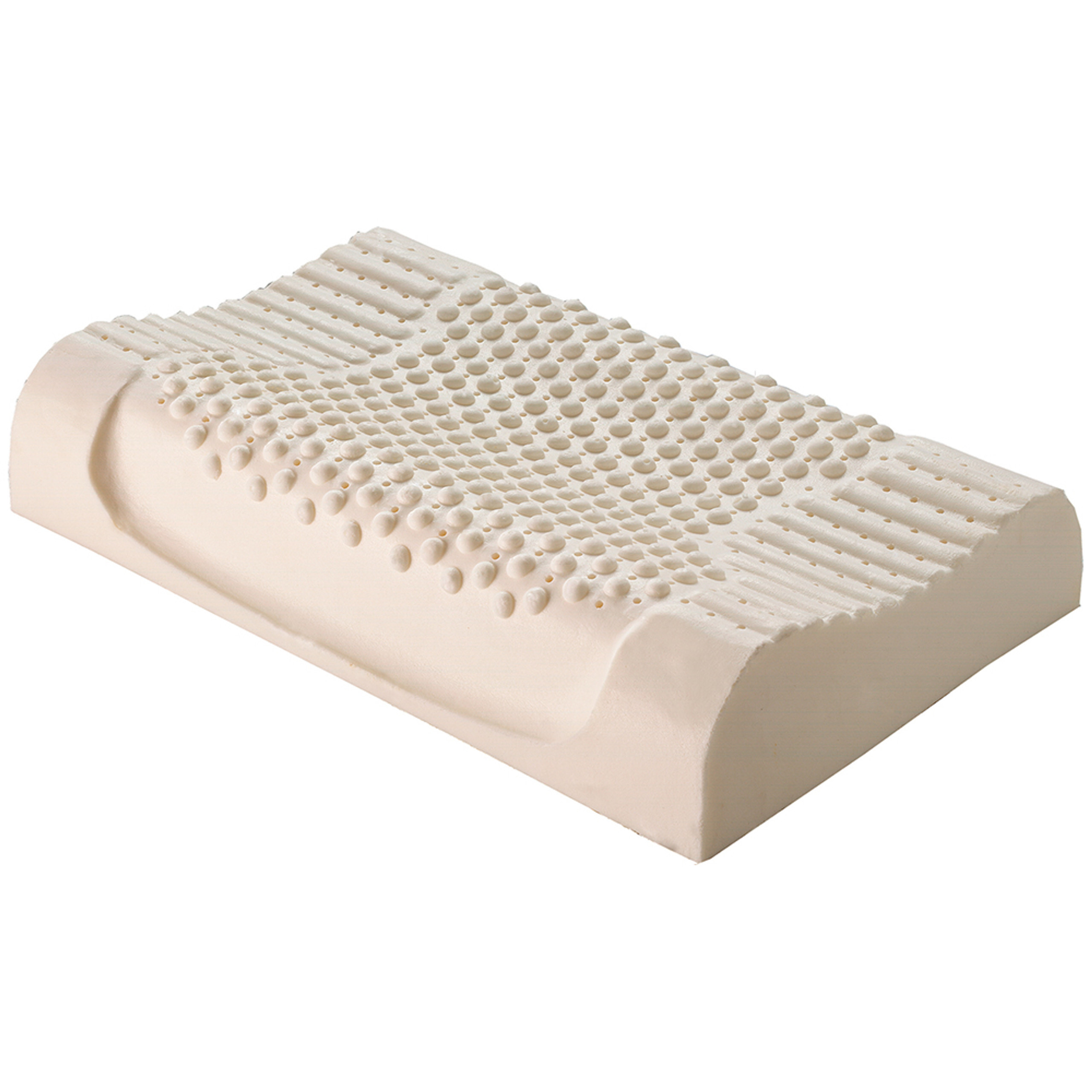
These are often considered the gold standard for neck pain relief. Contour pillows have a curved design that cradles your neck while supporting your head.
Best for: Side and back sleepers with chronic neck pain.
Why they work: The contoured shape maintains cervical curve while memory foam moulds to your unique shape.
Cervical Support Pillows
Specifically designed with a depression for your head and raised edges for neck support. These pillows force proper alignment rather than relying on the pillow to mould to you.
Note: It is advisable to consult a doctor before choosing one, as suitability can vary depending on individual conditions.
Best for: People with severe neck pain or specific cervical issues.
Why they work: Built-in neck support prevents your head from tilting at the wrong angles
Adjustable Pillows
These pillows let you add or remove fill to customise height and firmness. This is crucial because the "perfect" pillow height varies from person to person.
Best for: People who need precise customisation or couples sharing different pillow preferences.
Why they work: You can fine-tune support exactly to your needs
Quick Decision Tree: Find Your Ideal Pillow
| Your Situation | Recommended Pillow Type | Key Features |
|---|---|---|
| Side Sleeper | Contour memory foam or adjustable latex | Thick (10–15 cm), firm support |
| Back Sleeper | Cervical support or medium-firm memory foam | Medium thickness (5–10 cm) |
| Stomach Sleeper | Soft down alternative or none | Thin or no pillow |
| Morning Stiffness | Contour pillows with neck support | Built-in cervical curve |
| Chronic Pain | Cervical support pillows | Medical-grade support design |
| Sleep Hot | Latex, bamboo covers, gel-infused foam | Cooling and breathable materials |
How Do I Know What Pillow Height I Need?
Pillow height is critical for neck pain prevention. Here's how to determine your ideal height:
For Side Sleepers
Measure the distance from your ear to the edge of your shoulder while lying on your side. This is roughly how thick your pillow should be when compressed under your head's weight.
Quick test: Lie on your side with your current pillow. Have someone check if your nose is pointing straight ahead (good alignment) or angled up or down (poor alignment).
For Back Sleepers
You need less height than side sleepers. Your pillow should fill the gap between your neck and the mattress without lifting your head too high.
Quick test: Lie on your back. Your chin should be parallel to the ceiling, not tilted toward your chest or reaching toward the ceiling.
For Stomach Sleepers
Use the thinnest pillow possible or no pillow at all. Stomach sleeping already strains the neck, and a thick pillow makes it worse.
Better option: Consider training yourself to sleep on your side or back for long-term neck health.
Because everyone’s neck shape, shoulder width, and comfort preferences vary, there is no single “best” pillow for all. Focus on maintaining spinal alignment rather than relying solely on labels like “orthopaedic” or “ergonomic.”
Should I Choose a Firm or Soft Pillow for Neck Pain?
For neck pain, medium-firm typically works best. Here's why:
Too soft: Your head sinks too far, creating an unnatural neck angle
Too firm: No contouring to support your neck's natural curve
Medium-firm: Provides support while allowing some contouring
However, personal preference matters. If you've always been a soft pillow sleeper, jumping to a very firm pillow might cause more problems initially.
Common Mistakes When Choosing Pillows for Neck Pain
-
-
-
- Choosing based on firmness alone - Firmness doesn't equal support. Focus on contouring and neck alignment instead.
- Ignoring sleeping position - Side sleepers need different support than back sleepers. Match your pillow to your primary sleep position.
- Expecting instant results - Your body needs 2-3 weeks to adapt to proper alignment. Don't give up after one night.
- Focusing only on the pillow - Consider your mattress, sleeping position, and daytime posture as part of the complete solution.
-
-
Additional Tips for Managing Neck Pain
Create a Sleep-Friendly Environment
Keep your bedroom cool (18-20°C) and use blackout curtains. Better sleep quality helps your body recover from any existing neck strain.
Consider Your Daytime Habits
Poor posture during the day can contribute to nighttime neck pain. Pay attention to your computer workstation setup and phone usage.
Gentle Stretching
Simple neck stretches before bed can help relax tense muscles and prepare your neck for proper alignment during sleep.
Gradual Position Changes
If you're changing from stomach sleeping to side sleeping, do it gradually. Sudden changes can initially cause discomfort.
A Path to Pain-Free Mornings
 Choosing the right pillow for neck pain isn't about finding the most expensive or most advertised option. It's about understanding your specific needs and finding a pillow that maintains proper spinal alignment for your sleeping style.
Start by honestly assessing your primary sleeping position, then look for a pillow that provides appropriate height and support for that position. Remember that some trial and error is normal. What works for someone else might not work for you.
Most importantly, be patient with the process. Your neck didn't develop pain overnight, and it won't heal overnight either. But with the right pillow and proper sleep habits, those pain-free mornings are absolutely achievable.
Your neck deserves proper support every single night. Isn't it time you gave it the pillow it needs? Explore our pillow collection designed to support recovery, relieve pressure, and elevate everyday care.
Disclaimer: While the right pillow can significantly reduce neck pain, persistent or severe pain should always be evaluated by a healthcare professional.
Frequently Asked Questions
▶ How Long Does It Take for a New Pillow to Help Neck Pain?
Most people notice some improvement within 3-7 nights, but complete adaptation can take 2-3 weeks. Your neck muscles need time to adjust to the new support pattern.
▶ What if a New Pillow Doesn't Help?
If you've tried a properly supportive pillow for 3-4 weeks without improvement, consult a healthcare provider, evaluate your mattress, or consider physical therapy. Persistent neck pain might indicate underlying issues beyond pillow support.
▶ When Should I Replace My Neck Pain Pillow?
Replace your pillow every 2-3 years or when it loses shape, causes returning neck pain, has stains/odours, feels lumpy, or requires constant adjusting. These signs indicate the pillow no longer provides proper support.
▶ Can I Use Two Pillows for Neck Pain?
Using two pillows is generally not recommended as it often creates improper neck angles. Instead, choose one properly sized pillow for your sleeping position or use an adjustable pillow to achieve the right height.
▶ Should I Sleep Without a Pillow for Neck Pain?
Only stomach sleepers should consider sleeping without a pillow. Side and back sleepers need pillow support to maintain proper spinal alignment. Sleeping without a pillow can worsen neck pain for most people.
▶ What About Pillow Protectors for Neck Pain?
Pillow protectors are recommended as they keep your pillow clean and extend its life. Choose breathable, hypoallergenic protectors that won't interfere with your pillow's supportive properties or temperature regulation.