Silk pillowcase benefits: the perks, the limits, and how to choose
26th Aug 2026
|
Silk pillowcases have gone from a quiet luxury to the thing all over your feed, promising smoother hair and glowing skin by morning. So what actually holds up? Quite a bit, as it turns out, just not everything the ads promise. A silk pillowcase will not replace your skincare or fix a rough night's sleep, but its smooth, barely-absorbent surface does earn its place, mostly by being gentler on your hair and skin than cotton. Below is what it does, what that momme number means, and how to choose and care for one so it lasts.
The real benefits (and the honest limits)
Most of silk's perks come down to two simple things: it is smooth, so it creates less friction than cotton, and it is not very absorbent, so it does not draw moisture off your skin and hair. Independent health sources such as GoodRx note that this is where the benefits come from, while also being clear that large clinical studies are limited. With that framing, here is what silk genuinely helps with.
- Kinder to hair. This is the benefit experts agree on most. Less friction means less tugging on your hair overnight, so you wake with fewer tangles, less frizz and less bedhead. Helpful if your hair is curly, frizz-prone, or you are trying to stretch a blow-wave an extra day.
- Gentler on skin. A smooth surface causes fewer of those morning 'sleep creases' pressed into your cheek. Some believe that, over years, less nightly friction may mean fewer set-in lines, though it would be a stretch to rely on a pillowcase alone for that.
- Keeps moisture where you want it. Because silk absorbs far less than cotton, your skin's natural oils and the night-time skincare you just paid for stay on your face rather than soaking into the pillow.
- Cooler and breathable. Silk helps regulate temperature and does not trap heat the way some synthetics do, which is a small win for hot sleepers.
- Gentle for sensitive skin. Silk is naturally hypoallergenic and low-irritation, so people with sensitive or reactive skin often find it comfortable. It is a supportive choice, not a treatment, so for eczema, acne or any skin condition, keep following your usual professional advice.
The pattern from dermatologists is simple enough: silk is a nice addition to a good routine, not a replacement for it.
What momme weight means
Once you start shopping you will see silk described by its momme (written mm), and it is the number that matters most. Momme is the weight, and therefore the density, of the silk, a bit like thread count is for cotton sheets. For pillowcases, somewhere in the 19 to 25 momme range is the usual sweet spot: dense enough to feel smooth and wear well, without being unnecessarily heavy. Lower than that tends to feel flimsy and wear out faster.
The other word to look for is mulberry silk, which is the high-quality, long-fibre silk most experts recommend. Ideally you want 100 percent mulberry silk rather than a blend. Momme is not always printed on the label, so if in doubt, ask, and check the details on the specific product before you buy.
Silk versus satin: they are not the same thing
This trips a lot of people up. Silk is a natural protein fibre. Satin is a type of weave, and satin pillowcases are usually made from polyester. Satin mimics that smooth, glidey feel at a much lower price, and it does give you some of the same friction benefit for hair, which is why it is a perfectly good starting point if budget is tight. What it does not share is silk's breathability and its low-absorbency, moisture-friendly nature. If you want the full set of benefits, real mulberry silk is the one. If you mostly care about smoothness for your hair, satin will get you part of the way.
| Mulberry silk | Satin (polyester) | Cotton | |
|---|---|---|---|
| What it is | Natural protein fibre | A weave, usually polyester | Natural plant fibre |
| Friction on hair and skin | Typically very low | Low | Higher |
| Moisture and oils | Generally less absorbent than cotton | Varies by construction | Typically more absorbent |
| Breathable and cooling | Breathable | Varies by construction | Breathable |
| Price | Highest | Budget-friendly | Everyday |
How to care for a silk pillowcase so it lasts
Silk is not as fussy as its reputation suggests, but the golden rule is to follow the care label, because it genuinely varies from one pillowcase to the next. queenb's own silk pillowcases are a good example: some are hand-wash only, while others are happy on a cool, gentle machine cycle. Whatever yours says, avoid bleach, skip fabric softeners, and steer clear of enzyme or biological detergents where the maker asks you to, since these can damage the fibres. Do not tumble dry unless the label specifically allows it, hang it to dry out of direct sunlight, and use a cool iron only if you need to. Wash it about as often as any pillowcase, every week or two, since it still meets your face every night.

Who gets the most out of silk
If you have frizz-prone or curly hair, tend to run hot at night, have sensitive skin, or you are simply chasing the small, nice-to-have gains in your routine, a silk pillowcase is an easy upgrade you notice quickly. It also makes a lovely, affordable-luxury gift. For a medical skin condition, stick with your usual professional advice, but for everyday frizz and comfort, it is an easy one to enjoy.

Shop silk at queenb
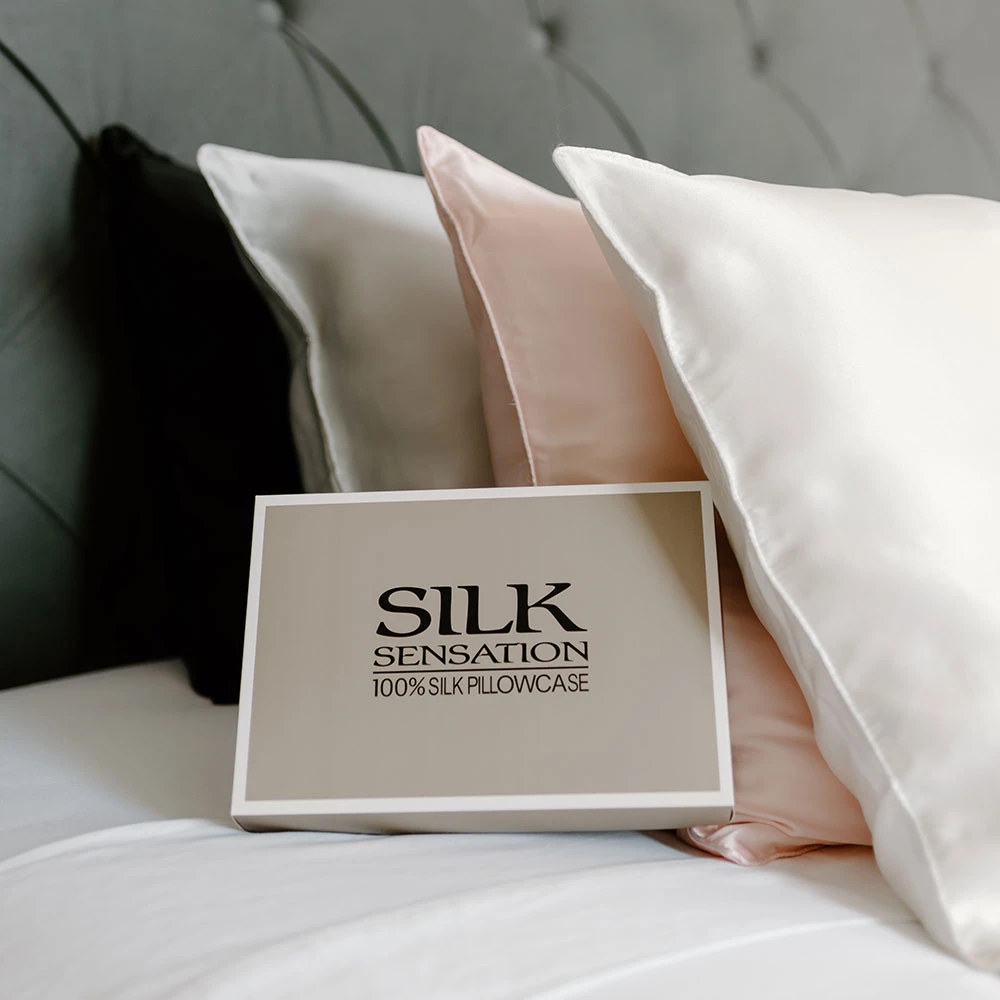
Ready to try one? You will find silk options in our pillowcase range, including boxed mulberry silk pillowcases that make a lovely gift. Shipping is free on NZ orders over $100, and you can pay with Afterpay if you prefer to spread it out.
Frequently asked questions